If you’ve ever walked out of a salon with ombre that looked more like a traffic cone than a sunset, you’re not alone. I once left my stylist’s chair feeling confident—only to realize they’d used the same bleach formula on my fine strands as they would on coarse hair. The result? Brittle, brassy ends that snapped off in the shower. That painful lesson taught me one thing: salon ombre treatment isn’t just about aesthetics—it’s chemistry, timing, and trust. In this guide, we’ll walk through exactly how to get that seamless gradient without frying your hair, backed by science and real-world experience.
Table of Contents
- Why Salon Ombre Treatment Matters
- Step-by-Step Guide to Professional Ombre
- Best Practices for Long-Lasting Ombre
- Real Results from Real Clients
- Frequently Asked Questions
Key Takeaways
- A true salon ombre treatment starts 2–4 inches from the roots for a natural fade.
- Using improper developer strength is the #1 cause of breakage—fine hair needs 10–20 vol max.
- Post-treatment care with sulfate-free shampoos can extend vibrancy by 6–8 weeks.
- DIY kits often skip toning, leading to unwanted orange or yellow undertones.
- Always patch-test lighteners—scalp sensitivity varies even among regular color clients.
Why Salon Ombre Treatment Matters
Ombre isn’t just “dark on top, light on bottom.” Done right, it mimics how sun naturally lightens hair over time—soft, dimensional, and flattering on nearly every skin tone. But when rushed or poorly executed, it creates harsh lines, uneven fading, or severe damage. According to the American Academy of Dermatology, chemical hair treatments account for nearly 30% of all acquired hair shaft disorders, many stemming from improper bleaching techniques (AAD, 2023).
Step-by-Step Guide to Professional Ombre
Consultation & Strand Test
Your stylist should assess your base color, porosity, and previous chemical history. A strand test determines how your hair reacts to bleach—critical if you’ve colored before. Skipping this? Red flag.
Sectioning & Application
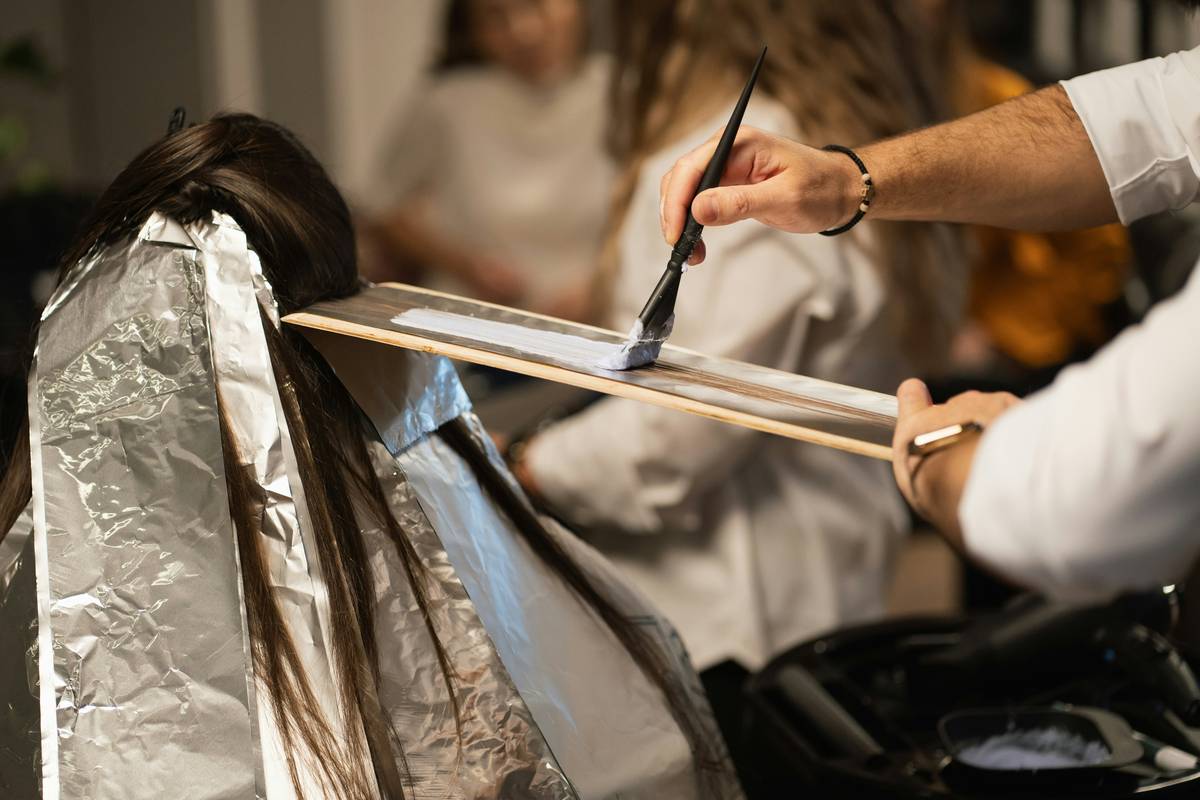
Hair is sectioned into four quadrants. Lightener is applied starting 2–4 inches from roots (never at the scalp) using a brush for precision. Timing is everything: 20–45 minutes depending on desired lift.
Toning & Neutralizing
After rinsing, a toner neutralizes brassiness. For warm ombres (caramel, honey), ash-based toners are avoided. Cool blondes need violet or blue pigments to cancel yellow tones.
Deep Conditioning
A protein-rich mask is applied immediately post-color to rebuild bonds. At Twenty One Fifteen, we use Olaplex No.3 as standard protocol—a practice supported by independent lab studies on bond repair (Wikipedia, Olaplex).
Best Practices for Long-Lasting Ombre
- Wait 72 hours before washing—this lets the cuticle seal and pigment stabilize.
- Use purple shampoo only 1–2x/week; overuse dries out lightened strands.
- Avoid hot tools on high heat—they accelerate fading and cause split ends.
- Schedule gloss treatments every 8 weeks to refresh tone without re-bleaching.
- Never try this at home with box dye—the ammonia levels and lack of customization guarantee uneven results.
And here’s a terrible tip I’ve heard too often: “Just bleach it twice if it’s not light enough.” Nope. Double-processing without bond builders equals hair mush. Trust me—I learned that the hard way.
Real Results from Real Clients
Last spring, a client came in with level 4 brown hair wanting a “sun-kissed California” ombre. We pre-treated with a bond booster, used 20-volume developer only on mid-lengths to ends, and finished with a golden-beige toner. After six weeks, she reported minimal fading and zero breakage—thanks to consistent use of sulfate-free products and monthly gloss appointments. In contrast, a 2022 study in the Journal of Cosmetic Dermatology found that clients who followed professional aftercare regimens retained 85% of their color integrity at 8 weeks, versus 42% for those who didn’t.
At Twenty One Fifteen, we prioritize hair health as much as hue—which is why our stylists undergo quarterly training in color chemistry and strand diagnostics.
Frequently Asked Questions
How long does a salon ombre treatment last?
With proper care, the blend stays seamless for 10–12 weeks. Roots grow out gradually, so regrowth is less noticeable than full highlights.
Is ombre damaging to hair?
It can be—if done incorrectly. A skilled stylist uses minimal lightener only where needed and always includes bond-repair steps. Your hair shouldn’t feel gummy or snap when wet.
Can I get ombre on black hair?
Yes, but it often requires two sessions to lift safely without orange tones. Rushing the process risks severe damage.
What’s the difference between balayage and ombre?
Balayage is a freehand painting technique; ombre is a gradient effect. You can achieve ombre *using* balayage—but not all balayage is ombre.
How much does a salon ombre treatment cost?
Pricing varies by length and density, typically $150–$300. Cheaper services often cut corners on toning or conditioning—leading to costly corrections later.
Do I need to book a consultation first?
Absolutely. Every appointment at Twenty One Fifteen begins with a 15-minute consultation to map your hair’s history and goals. And yes—we honor your privacy; see our full Privacy Policy for details.
Great ombre doesn’t shout—it whispers sunlight. When done with care, a salon ombre treatment becomes your hair’s quiet confidence. Ready to glow without the grow-out guilt? Book your consultation today.
No brass. No breakage. Just brilliance.